Teams needed to process IDs, bank statements, business documents, and compliance checks without depending on manual review.
doxter
A production AI platform for document processing, eKYC, and eKYB, built to handle large volumes with configurable workflows, permissions, and backend automation.
From raw documents to structured workflows.
doxter needed a backend that could process documents, support onboarding flows, and keep different services working together under real production load.
A backend platform that orchestrates OCR, classification, extraction, eKYC, eKYB, billing, and authentication across multiple services.
A production system processing 10,000+ documents per day across markets like Egypt, UAE, Jordan, Mexico, and Latin America.
Backend Engineer responsible for backend features, async pipelines, API permissions, billing, CI/CD, and deployments on the Kubernetes dev cluster.
Main Features
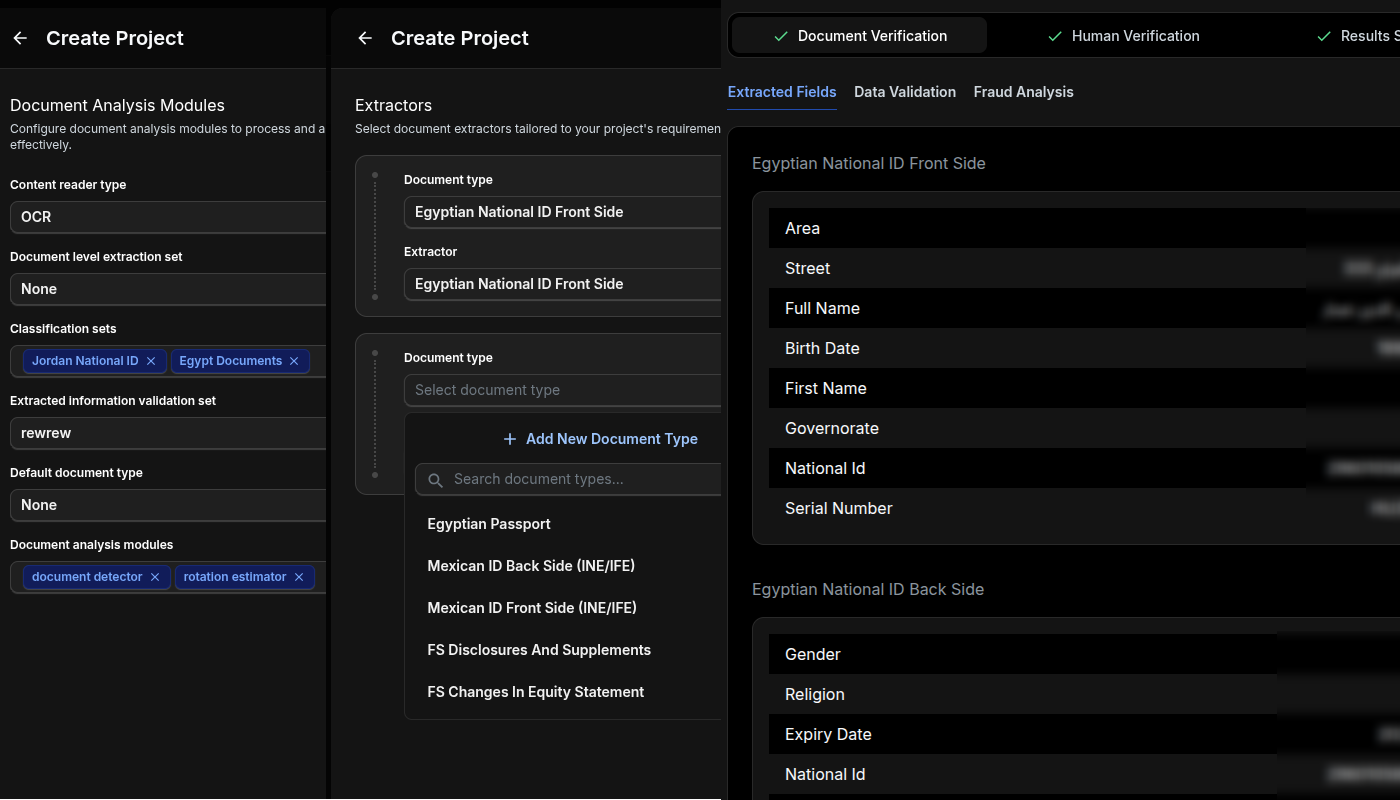
The core workflow: process, extract, and validate documents.
The main value in doxter was turning uploaded files into structured output through configurable backend workflows.
Multiple steps in one backend flow.
Projects can define document types, extraction rules, validation steps, and processing behavior so the same platform can handle different document workflows without rebuilding the backend each time.
Supporting Features
The platform around the main workflow.
Beyond document processing, doxter needed the product and operational pieces that make it usable by real organizations: secure access, business document workflows, and flexible billing.
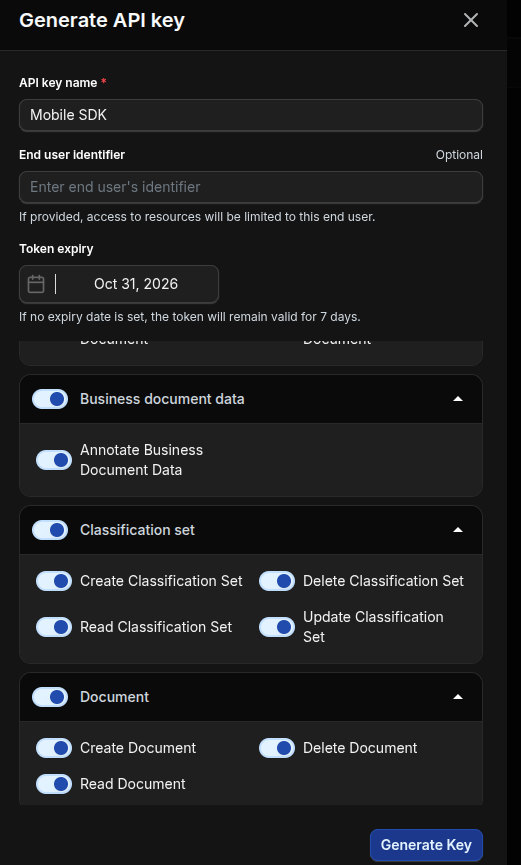
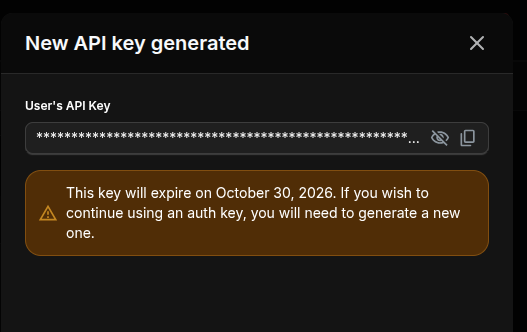
API keys with real permission control.
The platform supports API keys with expiry, revoke, verify, and assignable permissions, so organizations can control which resources and actions each key can access.
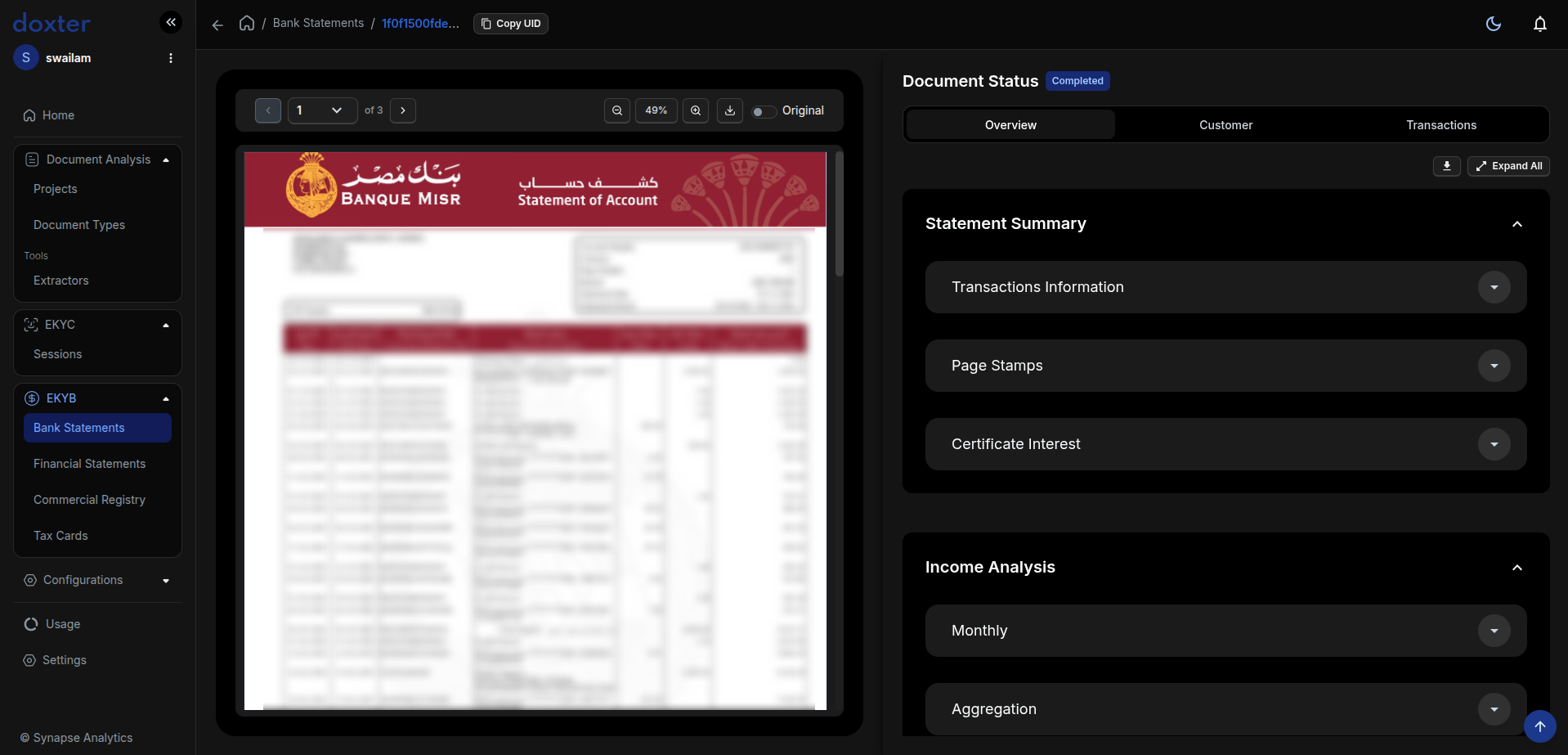
Business onboarding and document workflows.
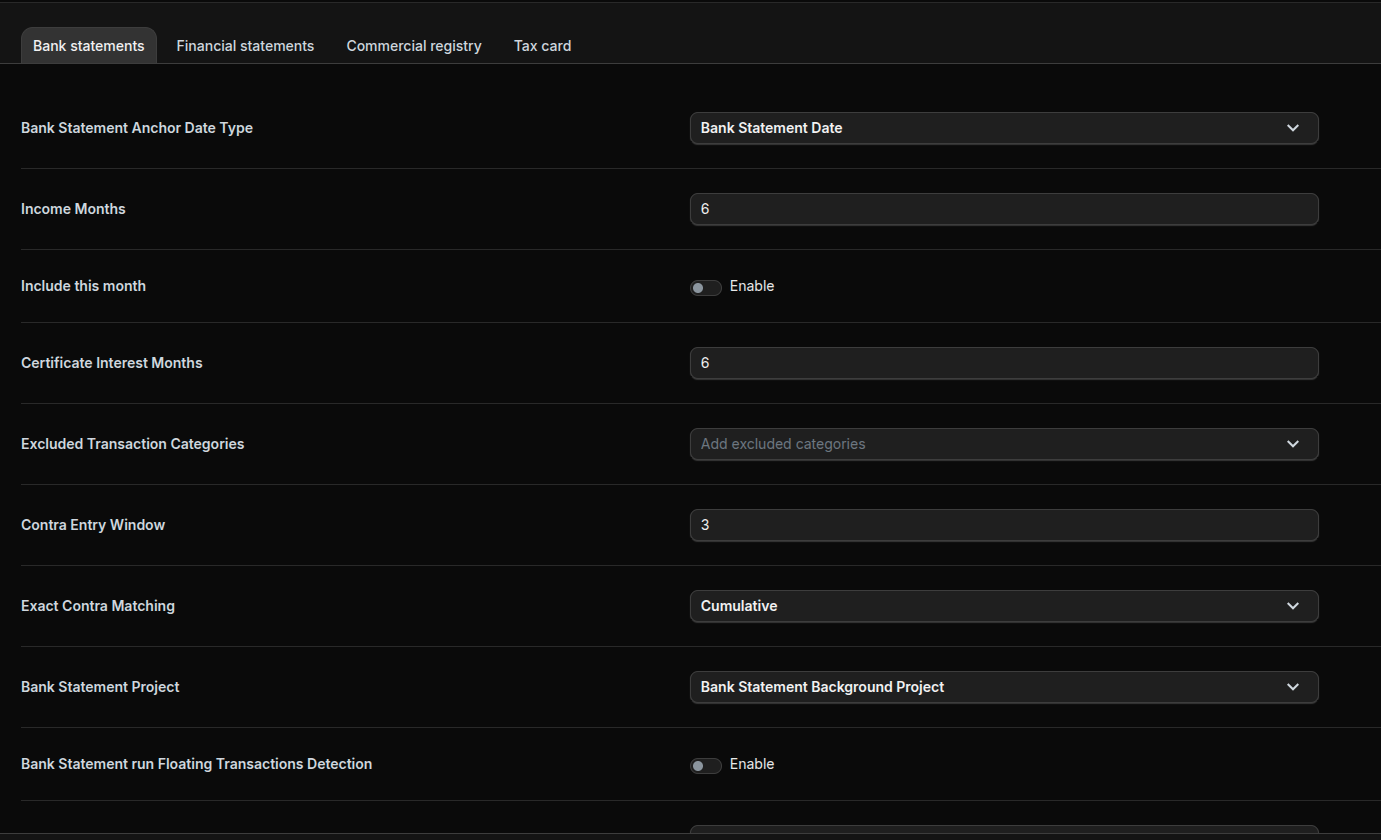
The backend supports eKYB flows for bank statements, tax cards, financial statements, and commercial registry documents with structured extraction and export-ready results.
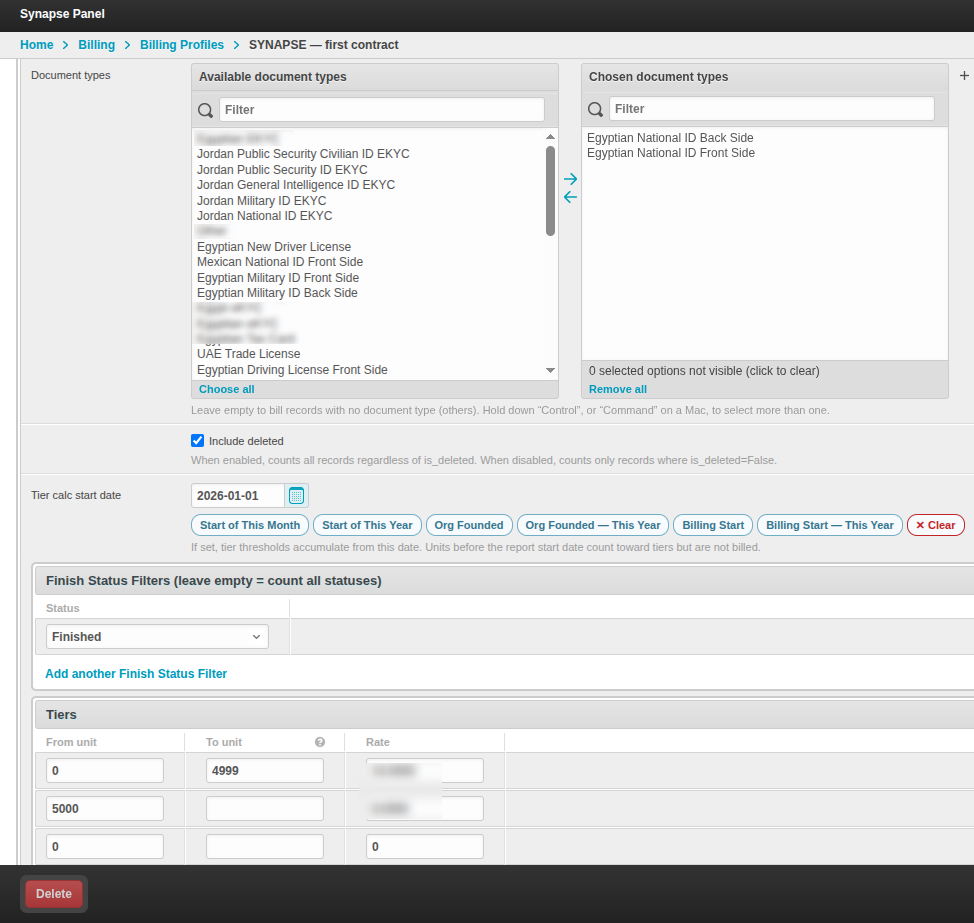
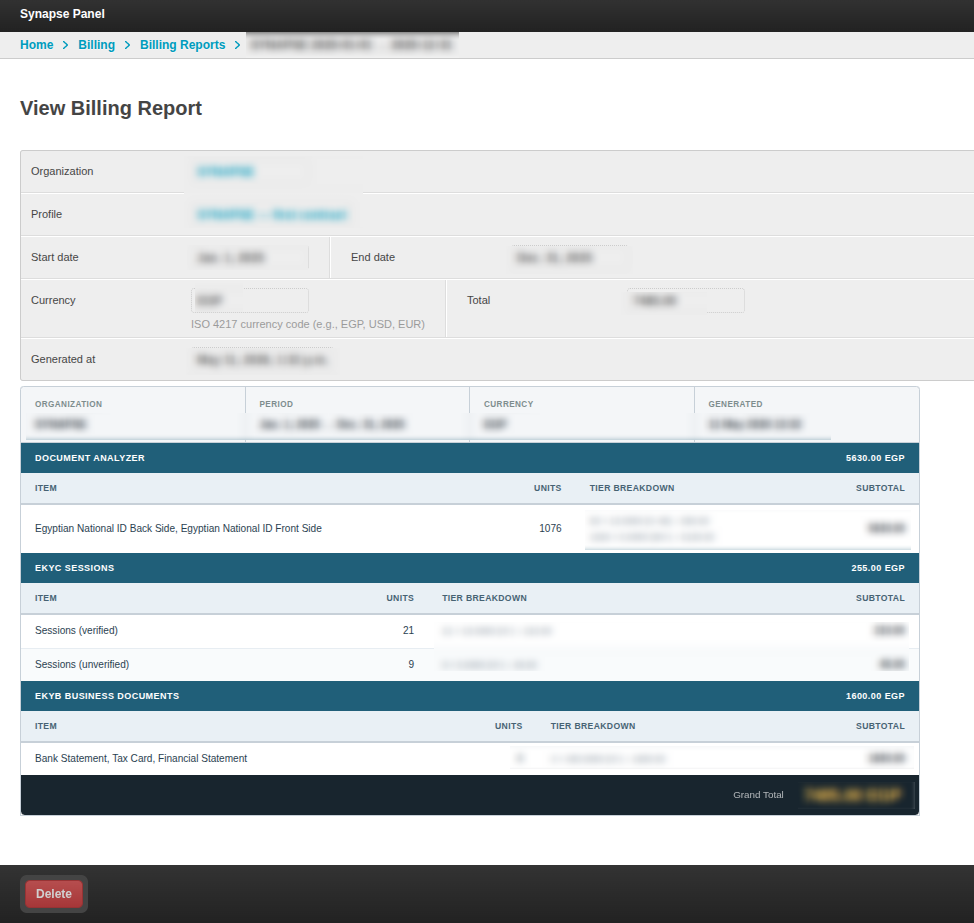
Dynamic billing instead of manual calculations.
I created a billing module where admins can define profiles, tiers, currencies, filters, and report ranges for analyzer, eKYC, and eKYB usage, then generate reports and Excel exports from actual system data. This solved the problem of manual billing calculations which was time consuming and error prone.
Engineering Notes
Decisions that kept the backend maintainable.
Celery and Redis coordinate long-running document work across OCR, extraction, fraud detection, and verification services.
Projects can define document types, extraction rules, validation steps, and processing behavior so the backend can support different use cases without forking the system.
A big part of the work was improving and building the new backend while also solving some legacy issues for the old backend, improving retries and failure handling, and reducing instability in services that already had real production traffic.
I also worked on CI/CD improvements, multiple builds for different environments and deployment types, deployment pipelines, and Kubernetes dev-cluster work to make the platform easier to ship and maintain.